
An Israeli Foothold in Somaliland: The Gift Al-Shabaab Has Been Waiting For
Following reports that Israel is considering a military base in Somaliland, this article examines the potential regional fallout. Abdurahman Nur explores how the move could fuel al-Shabaab recruitment, heighten tensions in the Horn of Africa, and threaten stability around the Red Sea while deepening divisions within Somali communities.
Abdurahman Nur
3/16/20264 min read
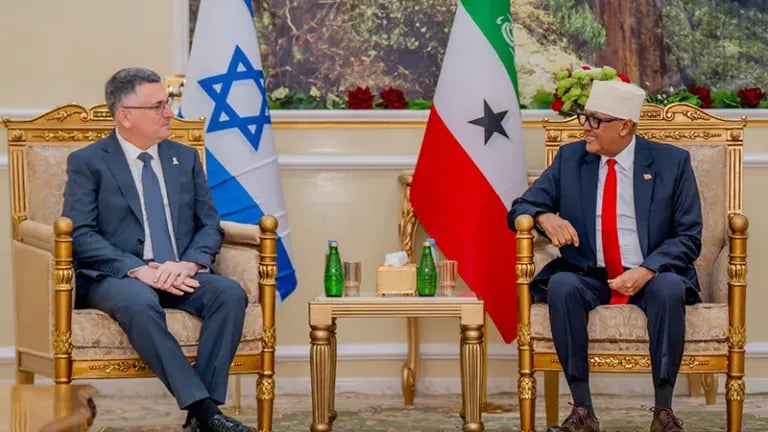
Bloomberg reported this week that Israel is exploring plans for a military and intelligence base in Somaliland.
Such a base, if established, would risk destabilising the Horn of Africa, spark a resurgence in al-Shabaab recruitment with thousands of new recruits galvanised from every corner of the Somali nation, ignite direct conflict with the Houthis, and choke traffic through the Red Sea - sending shockwaves through global markets and driving up shipping and energy costs worldwide.
Security analysts across the region have long warned that foreign military deployments on Somali soil carry significant propaganda value for jihadist groups.
The Israeli security teams are already scouting elevated ground roughly 100 kilometres west of Berbera for this forward outpost. Somaliland’s minister of the presidency, Khadar Hussein Abdi, has not ruled out the idea; he told Bloomberg a “strategic relationship” with Israel “encompasses a lot of things” and that any base proposal “will be analysed at some point.” For the most part, Somaliland has only said it does not have an active plan yet.
President Hassan Sheikh Mohamud made Somalia’s position crystal clear in his Al Jazeera interview from Qatar: “There is no place to defend Israel in Somalia.” He warned that any Israeli base would be confronted and that the rushed recognition itself has only deepened instability. Defence Minister Ahmed Moalim Fiqi went further, calling the move a “serious violation” of international law and accusing Israel of planning to use Somaliland as a dumping ground for displaced Palestinians from Gaza.
Al-Shabaab moved quickly to exploit the announcement. Spokesman Ali Dheere declared the group would “fight against it,” framing any Israeli presence as Zionist occupation propping up the northwest administration. Islamic State in Somalia echoed the threat. For these jihadist groups, visible foreign troops, drones and surveillance on Somali soil is the perfect recruiting poster.
One uncomfortable reality often ignored in political debate is that al-Shabaab has never been a purely southern phenomenon. It is a pan-Somali cancer drawing fighters, financiers and leaders from across the entire nation and region. Its most ruthless emir, Ahmed Abdi Godane - mastermind of the Westgate massacre and countless other atrocities - was born and raised in Hargeisa, from the Isaaq clan that dominates Somaliland. Early commanders like Aden Hashi Ayro built their networks in the north before spreading south. Money and recruits still flow from Somaliland communities, Ethiopian Somali areas and Kenyan borderlands. This is our shared wound.
Militants would almost certainly seize on obscure historical proposals from the 1930s and 1940s that discussed settling European Jews in Ethiopia’s Harrar region with access to ports such as Berbera and Zeila. Although these ideas never progressed beyond fringe lobbying efforts and were ultimately rejected by Haile Selassie, they provide ready-made propaganda material for groups eager to frame any Israeli presence as part of a long-standing colonial project.
There is a reason Somalis recognise this pattern. In 2006 al-Shabaab was a fringe movement of only a few hundred fighters before the US-backed Ethiopian invasion transformed the insurgency. Nationalist fury at foreign occupation exploded its ranks into the thousands within two years. Young men who had never touched a gun suddenly saw the group as the only force defending Somali soil and honour. The monster we are still bleeding to defeat today was born then.
Israel’s base plan risks replaying that exact script - only faster and deadlier.
The timing could not be worse. Somali National Army forces, backed by local Ma’awisley militias, have been making real, blood-bought gains - reclaiming territory in Lower Shabelle and Hirshabelle, dismantling networks, eliminating commanders. Recruitment had slowed; terrorist morale was cracking. A visible Israeli outpost would dramatically alter the narrative. The narrative writes itself: while politicians in Hargeisa chase foreign deals and Mogadishu issues statements, only the mujahideen are willing to bleed for Somali land. The group could see a surge in recruits from north and south. Funding from sympathetic donors abroad would surge. Even Isis in Somalia, already probing Puntland, would see fresh opportunity. This would also pull attention and resources away from critical domestic challenges like drought and famine relief affecting communities from the north to the south.
The Red Sea dimension turns this into a regional powder keg. Houthis have labelled any Israeli presence in Somaliland a legitimate target and have previously attacked vessels with Israeli or American links. Renewed disruptions in the Bab al-Mandab and Gulf of Aden - reminiscent of the piracy era when insurance premiums skyrocketed and global shipping was forced to reroute - could once again drive up shipping costs and ripple through global markets.
Israel’s apparent indifference to the global economic consequences of its actions raises an uncomfortable question: should this be the entity establishing a permanent foothold above the Red Sea’s most vulnerable choke point?
What makes this especially poisonous is the opposition already rising from Somalis themselves - not just in Mogadishu rallies, but inside Somaliland too. Clan tensions were already simmering dangerously two months after Israel’s recognition. This base could be the thing that breaks the camel’s back: propping up the central government in Hargeisa while further marginalising other clans who opposed the Israel recognition from the start. Influential clan elders and sheikhs on both sides of the divide feel the same gut punch. Sheikh Mustafa Haji Ismail Harun, one of Somaliland’s most prominent religious scholars who addressed gatherings in Hargeisa, warned that Somaliland would gain no benefit from engagement with Israel - describing it as betrayal with consequences in this life and the hereafter.
Pursuing foreign military partnerships may deliver short-term diplomatic headlines, but it risks fuelling the very instability that recognition was meant to end. The more urgent task is not securing external deals - it is repairing what those deals fracture.
Somaliland’s leaders would do well to listen to their own: the clan elders, sheikhs and communities already warning that this path divides rather than strengthens. Cohesion at home, not recognition abroad, is what will determine whether Somaliland survives what comes next.