
Two Months After Israel Recognised Somaliland: A Diplomatic Breakthrough or a Strategic Miscalculation?
The article argues that two months after Israel recognised Somaliland, the move has failed to trigger further international recognition and instead deepened diplomatic isolation, internal political tensions, and regional opposition while offering greater strategic benefits to Israel than to Somaliland.
Abdurahman Nur
3/10/20265 min read
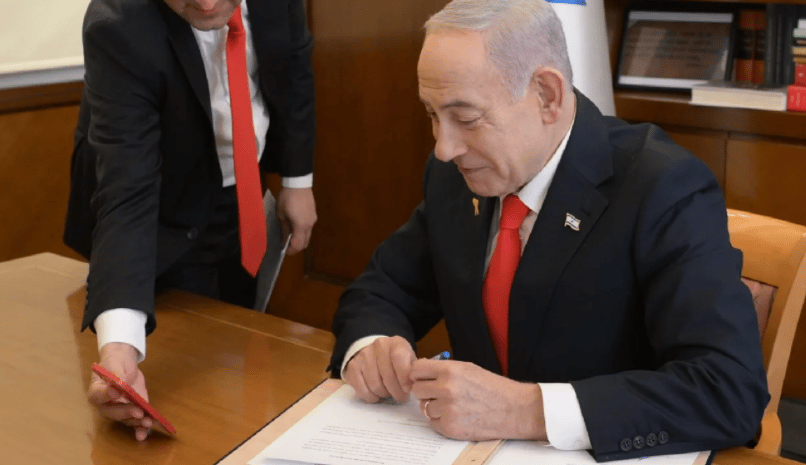
When Israel recognised Somaliland on 26 December 2025, the streets of Hargeisa lit up with blue-and-white flags in a way few had expected. Crowds cheered. Social media exploded. President Abdirahman Mohamed Abdilahi “Irro” called it the crack in the wall after 35 years in limbo. Officials were already talking about the domino effect - the UAE, Ethiopia, India, surely others would follow any day now.
Two months later the flags are still there. But the dominoes never fell.
What was sold as a breakthrough has instead slammed every other door shut - and exposed something uglier inside Somaliland itself.
Somaliland’s leadership framed Israel’s decision as the long-awaited crack in the wall of non-recognition. The thinking in Hargeisa was simple: once one UN member state crossed the line, others would find it easier to follow.
Events have unfolded very differently.
The UAE - despite heavy investment in Berbera port and quiet acceptance of Somaliland passports on its visa platform - has not recognised the territory. Ethiopia, which signed a controversial 1 January 2024 memorandum of understanding leasing 20 km of coastline around Berbera in exchange for port access and a commitment to “begin the process” of recognition, has remained silent. Saudi Arabia has instead deepened cooperation with Mogadishu, signing a defence and military agreement on 10 February and a maritime transport agreement on 19 February. The US, UK, India and the incoming Trump administration have shown no sign of replicating Israel’s step. Backlash has been swift. The African Union Peace and Security Council condemned the recognition in early January and demanded its revocation. At the AU Summit in Addis Ababa in February, leaders reaffirmed Somalia’s territorial integrity in explicit terms. Somalia’s election to the AU Peace and Security Council for 2026-2028 reinforced continental alignment around Mogadishu. Turkey’s President Erdogan called the move destabilising. Somalia, Egypt, Djibouti, the Arab League, OIC and EU have all reiterated Somali unity more forcefully than before.
Rather than normalising Somaliland’s claim, the recognition only stiffened resistance to it.
Inside Somaliland: Repression and Pushback
The domestic consequences were immediate - and they hit hard.
In the weeks after the announcement several imams were arrested over sermons or social media posts opposing ties with Israel. On 3 January Sheikh Mohamed Weli Abdirashid was detained in Hargeisa after criticising the deal in a Friday sermon. Some of those clerics are still in detention or facing charges.
The pattern escalated on 21-22 February with the arrest of popular TikToker and mother Ubax Abdirahman Cumar, known as Goosha. According to family statements and widely circulated footage, police forced entry into her home, detained her in front of her children, and transported her without allowing her to dress fully. The timing, during Ramadan, made it even worse. Authorities still haven’t explained the arrest.
Goosha had posted a video the day before questioning the government’s handling of the Israel recognition. Opposition politician Mohamed Ali A. Darod called the detention arbitrary, undemocratic and inhumane. The images of a mother being taken from her home in front of her children struck directly against the image Somaliland has worked so hard to project - that of a stable, rights-respecting democracy.
Is this really how a democracy protects its reputation - by silencing mothers and clerics during the month of Ramadan?
What really shifted the conversation, though, was the pushback from within the elite. Former president Muse Bihi Abdi came out publicly demanding the Irro administration disclose the full terms of the agreement with Israel. He wanted to know whether it was a treaty, a memorandum, or something else entirely - and warned that Somaliland’s constitution does not permit actions that contradict Islamic principles or harm Muslims.
Bihi is not some marginal voice. His intervention turned what was meant to be a national triumph into an unresolved constitutional and political mess.
Awdal Tensions and Emerging Clan Fractures
The recognition has sharpened divisions inside Somaliland itself. In Awdal region, protests erupted in Borama immediately after the announcement, with demonstrators carrying Palestinian flags and voicing opposition to the deal. Arrests of local youths soon followed, prompting strong criticism from clan elders who described the crackdown as heavy-handed and destabilising.
Notably, these arrests - and those of other vocal critics - appear to have targeted individuals primarily outside President Irro’s own sub-clan.
Similar unease has surfaced among other communities. Segments of the Habar Je’lo and other Isaaq sub-clans have expressed discomfort, feeling the decision was taken without the broad consultation that has traditionally prevented escalation. Public support for the move appears strongest among a narrow circle close to the administration. This risks reactivating the same intra-Isaaq sub-clan tensions that drove the 1994–1996 civil war, when grievances over representation and resources led to conflict before elders and xeer customary law restored calm.
The Northeast State (SSC-Khatumo), now a fully integrated federal member of Somalia, has strongly opposed the recognition from the outset.
These developments risk reigniting both inter-clan and intra-Isaaq tensions in areas that have historically managed coexistence through elders and customary law. Rather than strengthening Somaliland’s position, the recognition appears to be giving external actors new openings to exploit existing fractures.
Israel’s Strategic Gain - Somaliland’s Limited Return
For Israel, the move delivered immediate strategic value at relatively low cost. Somaliland’s 460-mile coastline overlooks the Gulf of Aden and sits adjacent to the Bab al-Mandab Strait - one of the world’s most critical maritime chokepoints. At a time when Houthi attacks have disrupted Red Sea shipping, formal recognition places potential port access and intelligence cooperation on the table. Somali Defence Minister Ahmed Moalim Fiqi has publicly stated that Israel is seeking to establish a military base near Bab al-Mandab to project power, a claim that aligns with several recent think-tank assessments examining Israel’s search for forward monitoring and logistics positions along the Red Sea corridor.
For Somaliland, the returns remain largely symbolic: flags, photo opportunities with Israeli Foreign Minister Gideon Saar, and limited technical visits. No secondary recognitions have materialised. No significant new economic inflows have emerged beyond pre-existing UAE-linked projects.
The imbalance is stark. Israel secured leverage; Somaliland absorbed the backlash.
The recognition has also accelerated broader Red Sea alignments. Saudi Arabia has strengthened defence and maritime cooperation with Mogadishu. Egypt has expanded security coordination. Turkey has reinforced its role as a defender of Somali unity through military and economic engagement. Turkish officials have repeatedly warned that recognising Somaliland would set a precedent affecting the status of the Turkish Republic of Northern Cyprus - an issue that carries particular sensitivity in British political circles given the UK’s historical role in Cyprus.
In this emerging order, central-state partnerships are consolidating. Parallel arrangements that bypass recognised sovereignty are encountering sharper resistance. Israel’s move has not reshaped the diplomatic map in Somaliland’s favour. It has intensified existing fault lines.
A Fragile Victory At Best
Somaliland has built institutions and enjoyed periods of relative stability that set it apart from much of the region. But that stability has never been uncontested. Violence against minority clans in the 1990s left enduring scars. Then came the 2023-24 conflict in Las Anod - sustained shelling of civilian areas including hospitals, extrajudicial killings, armed resistance - which ended with the emergence of the SSC-Khaatumo administration as a federal member state of Somalia in 2026. That single development removed roughly 35-40 percent of the territory Somaliland claims, directly undermining the argument that it still holds the defined colonial borders required under international law for secession or recognition.
Against this backdrop Israel’s recognition was presented as a historic breakthrough. The reality has been quite different. It has exposed institutional vulnerabilities: arrests of clerics, the detention of a civilian critic during Ramadan, elite demands for transparency, and deepening diplomatic isolation.
The flags still wave in Hargeisa. The strategic picture, however, looks very different. The promised domino effect never materialised. Continental opposition has only grown stronger. Internal dissent has been met with securitisation rather than dialogue.
Recognition without regional alignment can deepen isolation rather than end it.
In the end, durable solutions to Somaliland’s status cannot be manufactured through external recognition alone. They will require renewed dialogue between Hargeisa and Mogadishu - within a political framework that reflects the realities of Somalia’s constitutional order and the interests of all Somali communities.
Without that process, the whole December episode may simply be remembered as a diplomatic blunder.