
Deep Dive: Battle for the Northern Somali Coast
This article is a geopolitical analysis of intensifying competition over northern Somalia’s strategic coastline (especially ports like Berbera, Bosaso, Las Qoray, and Awdal) amid Red Sea and Horn of Africa tensions.
Suldan I. Mohamed, MA
5/20/202610 min read
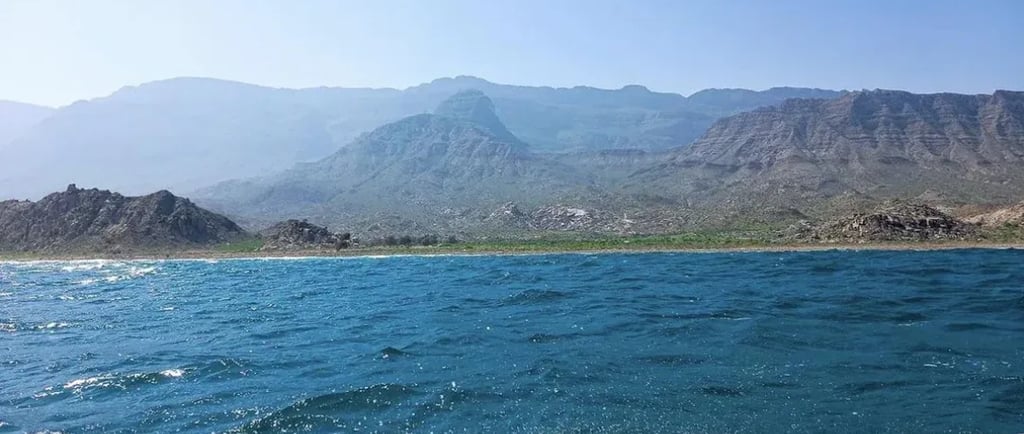
Since the early 2010s, growing international attention has been directed toward the northern Somali coastline, particularly the strategic ports of Berbera, Bosaso, and more recently Las Qoray and the Awdal coast.
The intensifying interest comes amid growing geopolitical contest in the waters surrounding the Horn of Africa, as regional powers across the Red Sea and the Gulf increasingly seek to project influence over some of the world’s most strategic maritime corridors including the Red Sea, Bab el-Mandeb, the Gulf of Aden, the Suez Canal, the Arabian Sea and the Strait of Hormuz.
Among the principal actors competing for influence along the Somali northern coast are the UAE-Israeli axis, Türkiye, and Ethiopia with each pursuing distinct strategic, economic and security interests in the region.
Before addressing the question of “why now,” it is important to first lay the groundwork by examining the key actors involved and understanding the motivations driving their growing interest in the Somali coast.
UAE-Israeli Axis: The Iran War & Reshaping the Middle East
The UAE-Israeli axis is central component to current geopolitics fronts in the Middle East and the Horn of Africa but how was relationship formulated?
The Relationship between the UAE and Israel
The UAE formalised relations with Israel under the Abraham Accords in September 2020 under the Trump administration shifting Abu Dhabi’s engagement from discreet contact to open normalisation.
However, the reality is that UAE–Israel relations did not begin in 2020. For years prior, the two countries had maintained unofficial links across several domains. This relationship was multi-faceted with underlying elements including:
Security: Both Tel Aviv and Abu Dhabi saw Iran’s regional influence as a major concern. This alignment created space for quiet intelligence cooperation and strategic dialogue. While rarely acknowledged publicly at the time, such coordination laid an important foundation for trust.
Economic: Israeli companies and technologies found their way into the UAE market through intermediaries, often routed via third countries. Sectors like cybersecurity, surveillance and advanced technology became areas of quiet engagement.
Diplomacy: Officials from both sides reportedly met in third countries, maintaining a level of communication that stopped short of official recognition but went beyond mere speculation. For example, in 2015 Israel established a small diplomatic presence in Abu Dhabi linked to the International Renewable Energy Agency (IRENA).
For Israel, closer ties with a key GCC state were central to its broader normalisation strategy with the Arab world with an aim of reducing its regional isolation while simultaneously securing a strategic foothold within the Gulf against Iran.
Meanwhile for Abu Dhabi, deeper relations with Israel offered more than diplomatic recognition. They provided a pathway to greater influence in Washington as well as enhanced access to advanced technology and security cooperation. Most importantly, it gave the Emirates an opportunity to step out from beneath Riyadh’s shadow as the UAE sought to establish itself as an independent regional power in its own right.
In many ways, the accords did not create an entirely new relationship, but rather formalised one that had been developing quietly for years behind closed doors.
Shared Iran Problem
For the UAE like Israel, Iran equally is a political problem. Although in recent year, Abu Dhabi has increased economic engagement with Tehran as part of a wider GCC normalisation approach with the Iranians, events of the US-Israeli war with Iran since February 2026 has exposed the underlying animosity.
Some of the key areas of contention include the Gulf Islands of Abu Musa, the Greater and Lesser Tunbs which were seized by Iran rior to the formation of the UAE federation in 1971. Abu Dhabi has long viewed this as an occupation of Emirati territory.
Aside from land disputes, the underlying theme is rooted in ideology. The Iranians have an ideology of resistance against what they describe as Western imperalism in the Middle East centred around Israel as an occupying force. Conversely, the Emiratis seek economic and social integration with Western civilisation. Therefore, the two states are entrenched in opposing camps and see the other as detrimental to its wider aims.
This is evident in Yemen, where the Emirates have been involved in a proxy in Yemen alongside Saudi Arabia against Iran which has seen the UAE bombed several times.
Emirati Commercial Strategy
Much like its GCC neighbours, the UAE seeks to move away from overreliance on oil exports.
In fact, the UAE’s leadership understood relatively early that oil wealth alone could not guarantee long-term prosperity. As a result, Abu Dhabi spent decades deliberately diversifying its economy and repositioning itself as a regional hub for trade, finance, logistics, tourism, technology and global investment.
Central to this has been the development of entities such as DP World, which helped transform Emirati ports into some of the busiest globally, while Jebel Ali emerged as the region’s largest port and a key gateway for trade.
However, one problem exists for the UAE:
If successful ports were to emerge in Iran or along the northern Somali coast, Yemen, Sudan or Eritrea, they could gradually erode the UAE’s position as a dominant logistics hub in the region.
Therefore, gaining control over these ports via DP World or other political means is vital for Abu Dhabi’s national security. Additionally, maintaining control of these ports along the Horn of Africa and Middle East, up to the Mediterranean Sea would be economically lucrative while also developing soft power.
From Yemen to Sudan, Somalia to Libya, the UAE is supporting sub-state actors and cultivating friendly local factions to secure maritime access and commercial footholds.
How Israeli Political Strategy Aligns with the UAE
So where does Israel fit this puzzle? Israel’s relationship with much of post-colonial Africa was historically complicated by the perception among many African liberation movements and governments that the Israeli state formed part of a broader settler-colonial phenomenon, often compared to apartheid South Africa and Rhodesia. This perception intensified after the 1967 Arab-Israeli War and deepened further following Israel’s growing ties with apartheid South Africa during the Cold War.
Traditionally, African countries supported Arab states in the Israeli-Arab conflict. In response, Israeli foreign policy evolved toward cultivating relationships with peripheral, marginalised or separatist actors, particularly non-Arab and non-Islamist groups that viewed Arab nationalist governments as adversaries.
Below are some of the examples:
Nigerian Civil War: Israel covertly support for Biafra during the Biafran War.
Sudanese Civil War: Israel supported the Anyanya movement and later SPLA against the pro-Palestine Arab Khartoum regime.
Uganda: Supported anti-Idi Amin groups including UNLF and Tanzania after Amin embraced Gaddafi and Palestinian movements.
Conversely, Israel also formed strong relations non-Arab states with strategic value. Take the Chadian government in N’Djamena to counter Libyan influence in the region and Ethiopia/Kenya against Somalia in the Horn of Africa.
If we connect all of this back to today. With the UAE is supporting faction along the strategic maritime routes including the Southern Transitional Council (STC) in southern Yemen, Somaliland in northern Somalia and RSF in Sudan, the Israelis could potentially find new Arab/Muslim countries to join the Abraham Accords, reducing Israeli isolation.
What about Ankara and Addis Ababa?
For Türkiye, investment in Somalia is already significant. Ankara maintains its largest overseas military base in Mogadishu and has positioned itself as one of the Somali federal government’s closest partners through infrastructure, humanitarian aid, military training and economic agreements.
Unlike the UAE’s largely port-and-logistics driven approach, Türkiye’s engagement has focused on state-building and long-term political influence within the Somali Republic. Strategically, Somalia provides Ankara with a gateway into the wider Horn of Africa and Red Sea corridor as Türkiye seeks to expand its influence across Northeastern Africa.
Turkish involvement must also be viewed within the context of Ankara’s wider geopolitical competition with Israel. Expanding its presence in Somalia and the Red Sea therefore allows Ankara to project power into another strategic theatre while counterbalancing rival blocs.
For Ethiopia, the issue is more immediate. Since losing direct sea access following Eritrea’s independence in 1993, Addis Ababa has remained heavily reliant on Djibouti for trade. As a result, Ethiopia has increasingly looked toward ports along the northern Somali coast, particularly Berbera, as part of a strategy to diversify maritime access and reduce strategic dependence on Djibouti.
However, Addis Ababa has now shifted to seeking a military base on the coast. The controversial MoU with the Somaliland region included access to a section of the Awdal coast for a possible port and military base in exchange for recognition.
In this context, the northern Somali coastline has become a space where Emirati commercial ambitions, Turkish political influence, Israeli strategic interests and Ethiopian maritime aspirations increasingly intersect.
Division inside the old Somali Republic
Inside the Somali Republic, three factions exist.
Somaliland
Somaliland seeks independence from the rest of the Somali Republic. Under Abdirahman Irro, Hargeisa has taken a bolder foreign policy by forming a relationship with Israel with the diplomatic support of the UAE. Since then, Somaliland has actively attempted to join this geopolitical axis, siding with Israel and the UAE on various foreign policy positions. Similarly, it maintains relations with Addis Ababa, having signed a controversial MoU as aforementioned. This is primarily to undermine the position of the Federal Government of Somalia as it seeks to stand independently and demonstrate that on the global stage.
As a result, Hargeisa has a deal with the UAE’s DP World in Berbera as well as discreetly allowing the Israelis to setup base in the strategic port town despite objection by the Somali Federal Government.
Puntland
Although not claiming independence, Garowe has some level of autonomy compared to other Federal Member States aligned with the Somali Federal Government. Puntland has maintained relationships with the UAE with Abu Dhabi training Puntland security forces including PMPF. Additionally, DP World currently runs Bosaso port. It also maintains ties with Addis Ababa.
The split between Mogadishu on one side with Kismayo and Garowe on the other regarding foreign policy become evident when Mogadishu cut relations with the UAE in January 2026 with both regional states refusing to do so. UAE still controls Bosaso port.
Somali Federal Government
Somalia’s federal government in Mogadishu maintains extremely close relations with Türkiye as well as strong ties with Qatar, positioning itself within a different regional alignment to that of the UAE and its partners. This means that modern day Somalia is not only fractured by internal division but also facing a proxy war within its border involving both its neighbours in the Horn of Africa and the Middle East.
Full Circle: Why Now?
Now that we have unpacked various actors, factors and motivation with a dive into the underlying relations. Lets assess the why now.
The growing contest over the northern Somali coast is not occurring in isolation. Rather, it reflects a convergence of regional crises, shifting alliances and intensifying competition across the Red Sea and wider Middle East. What was once viewed primarily as a peripheral maritime zone is increasingly being drawn into the centre of global strategic calculations.
War in Gaza: Israel and Yemen
One of the clearest drivers behind this shift has been the militarisation of the Red Sea following the Gaza war and the Houthis in Yemen. Since late 2023, the Red Sea has transformed from a major commercial shipping corridor into an active geopolitical flashpoint. Attacks on commercial vessels, missile launches and naval deployments by global powers have fundamentally altered how states now view maritime security across the region.
For Israel, the Houthi threat exposed a major strategic vulnerability: Israeli cities are under threat. This is a major issue for every Israeli government as security is centre to Israeli politics. As a result, Israeli strategic thinking has gradually shifted toward securing influence further away from its own territory and effectively transporting the conflict closer to Yemen. This is where Somaliland and Berbera enter the picture. By setting up a base in Berbera, the Israelis can attack the Houthis from the northern Somali coast and potentially reduce missiles strikes in Israel.
Also, it is worth noting this forms part of the wider Israeli-Iran proxy war in the Middle East. By having closer access to important maritme chokepoints, the Israelis can apply pressure not just Iran but other states in the region. Ultimately, establishing its long term of economic and political hegemony in the Middle East.
US-Iran War: Strait of Hormuz Crisis
The Strait of Hormuz remains vulnerable to disruption in any future escalation involving Iran, the United States or Israel. Roughly a fifth of global oil trade passes through Hormuz, making it one of the most strategically important waterways on earth. The continued prolonged instability there already has dramatically increase the importance of alternative maritime corridors linking Europe, the Gulf and Asia through the Red Sea.
Consequently, the Red Sea route is now more strategically valuable than at any point in recent decades. This includes the Gulf of Aden.
Should large-scale confrontation between Iran and the United States resume, the Gulf of Aden could emerge as a secondary frontline. In such a scenario, the northern Somali coast would become strategically indispensable not only for regional actors but also for global powers seeking to secure shipping lanes and military positioning.
Post-Iran War Realignment
The Abraham Accords framework continues reshaping alliances across the Middle East and parts of Africa. States and sub-state actors increasingly view alignment with competing regional blocs as a means of securing diplomatic backing, investment and security partnerships.
The new Saudi-Turkish-Qatari and Pakistani security bloc is an example. We can also look at Israel’s bloc with Greece and Cyprus which also seems to increasingly involve UAE, India and Ethiopia.
Within this realignment, a fractured Somali Republic is directly impacted. The breakaway Somaliland region has closer relations with the UAE, Israel and Ethiopia whereas the Somali Federal Government is heavily aligned with Ankara, Riyadh and Doha.
Both blocs are competing for the Somali coast.
U.S Realignment with Eritrea
The United States’ growing engagement with Eritrea in 2026 signals a significant geopolitical shift. This development inevitably affects Ethiopia’s calculations. Addis Ababa increasingly fears long-term strategic encirclement. The current alliance between Sudanese Armed Forces (SAF), Eritrea, Egypt and Tigray rebels only increases these fears.
In recent months, PM Abiy Ahmed had set his eyes on the Eritrean port of Assab. However, with U.S. realignment with Eritrea due to the growing competition in the Red Sea, Abiy has received a clear message that the U.S does not support Ethiopian ambitions there.
Consequently, the Ethiopians will be setting their eyes back on the Awdal coast. Awdal is one the most strategic locations in northwestern Somalia. It sets at the gates of the Red Sea alongside Djibouti and would be very strategically important for Addis Ababa as it develops its navy.
This interest appears to be discreetly supported by Abu Dhabi and Tel Aviv as it would shift the geopolitical balance to have an ally with a base in a strategic location alongside Berbera.
Growing UAE-Saudi Rivalry
Meanwhile, rivalry between the UAE and Saudi Arabia has also re-emerged. The restart of large-scale conflict in Yemen during late 2025 and early 2026 exposed diverging priorities between Abu Dhabi and Riyadh once again. While Saudi Arabia primarily focuses on securing its southern border and containing the Houthis, the UAE has pursued a more expansive maritime strategy centred on ports, proxy forces and commercial influence stretching across southern Yemen with the STC.
The Saudi victory in Yemen and Emirati withdrawal has only intensified Abu Dhabi’s resolve in the northern Somali coast. Especially, Berbera and Bosaso.
New Turkish-Israeli Rivalry
At the same time, Türkiye and Israel are increasingly finding themselves on opposing sides of emerging regional alignments. Their rivalry, already visible in Syria, Gaza and the Eastern Mediterranean, is gradually extending into the Horn of Africa.
Ankara secured geopolitical victory in Syria at Israel’s doorstep. Ankara’s ally, Ahmed al-Sharaa has captured power in Damascus. Additionally, Turkish image of a centralised Syrian state has prevailed against Israeli idea for a federalised or fractured Syria in the corridors Washington with President Trump’s relationship with President Erdogan holding strong.
Consequently, Israel has set its eyes on Ankara’s most successful foreign policy project, Somalia by supporting the breakaway Somaliland administration in Hargeisa.
Conclusion
As these rivalries deepen, Somalia risks becoming another arena where larger geopolitical struggles are projected outward by competing external powers.
In this context, the battle for the northern Somali coast is no longer solely about Somalia itself. It is increasingly tied to the future security architecture of the Red Sea, the balance of power in the Middle East and the control of one of the world’s most important maritime corridors.
Author:
Suldan I. Mohamed, MA is a Somali political analyst, journalist and former governance advisor at the Office of the Prime Minister, Somalia.
Check out his Substack: https://suldanmohamed.substack.com